
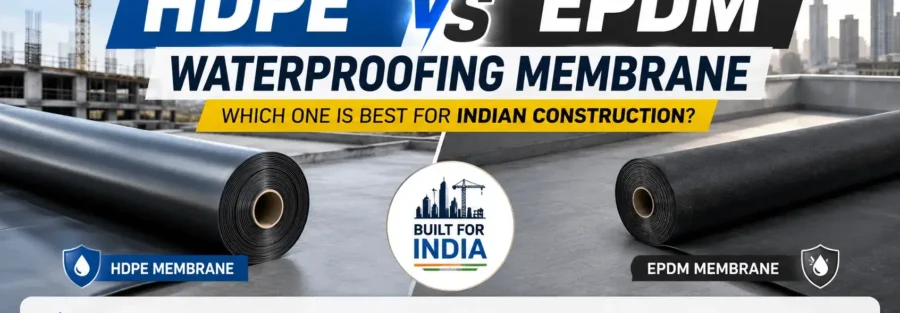
Water leakage is one of the biggest problems in Indian buildings, tunnels, and infrastructure. The right waterproofing membrane can save you lakhs in repair costs. Two of the most popular choices today are HDPE and EPDM membranes but which one should you use?
What Are These Membranes?
HDPE (High Density Polyethylene) is a plastic-based sheet membrane known for its hardness, chemical resistance, and long life. EPDM (Ethylene Propylene Diene Monomer) is a rubber-based membrane known for its flexibility, stretch, and excellent UV resistance. Both are widely used in India but they perform differently depending on the project type.
HDPE Membrane
- Excellent for tunnels, canals, landfills, and underground structures
- High puncture resistance – handles rocky or rough surfaces
- Strong chemical resistance – ideal near industrial sites
- Longer lifespan in buried or submerged conditions
- Cost-effective for large infrastructure projects
EPDM Membrane
- Best for rooftops, terraces, ponds, and exposed surfaces
- Highly flexible – moves with the building without cracking
- Outstanding UV and ozone resistance – handles Indian summers well
- Easy to install on curved or complex surfaces
- Excellent for water harvesting and green roof systems
Which Is Better for Indian Climate?
India has extreme conditions scorching summers above 45°C, heavy monsoon rains, and cold winters in the north. EPDM rubber handles UV exposure and temperature swings exceptionally well, making it the go-to choice for rooftop and terrace waterproofing. HDPE membranes are tougher against physical damage and chemicals, making them the preferred option for underground and civil infrastructure projects like metro tunnels, highways, irrigation canals, and flyovers.
Cost and Installation
HDPE sheets are generally more economical for large-area civil projects. They are welded using hot air or extrusion welding, creating a strong, seamless joint. EPDM membranes are slightly higher in material cost but faster to install on buildings. They can be bonded, mechanically fixed, or loose-laid. For smaller residential or commercial rooftop projects, EPDM often wins on ease of application and long-term reliability.
Maintenance and Long-Term Performance
One factor many contractors overlook is long-term maintenance. EPDM membranes are extremely low-maintenance once installed correctly, they can last 30 to 50 years with minimal upkeep, even on exposed rooftops under direct sunlight. HDPE membranes, when used underground or in water containment, are equally durable with virtually no degradation over decades. Both materials resist mold, algae, and biological growth a key concern in India’s humid coastal and high-rainfall regions. Choosing a quality-certified membrane from a trusted manufacturer ensures you get rated thickness, consistent density, and weld-ready edges that reduce installation errors and callbacks on site.
Why Choose Siddhi Rubber India?
At Siddhi Rubber India Pvt. Ltd., Noida, we manufacture and supply both HDPE and EPDM waterproofing membranes that meet the demands of Indian construction. As an ISO 9001:2015 certified company, our products are trusted by DMRC, L&T, Adani, NBCC, and dozens more across highways, ports, airports, and real estate projects across India.

