
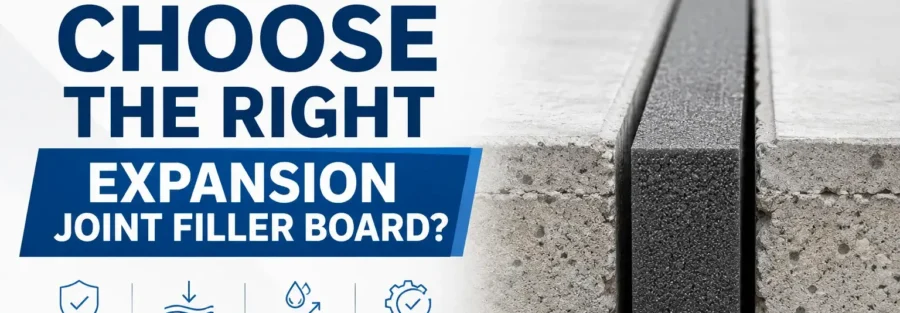
When it comes to building long-lasting bridges and highways, one small component makes a very big difference the expansion joint filler board. Most people do not think about it, but roads and bridges move constantly. They expand when it is hot and contract when it is cold. Without the right filler board, cracks appear, water seeps in, and the structure slowly breaks down. At Siddhi Rubber India Pvt. Ltd, we have spent years helping engineers, contractors, and project managers pick the right product for the right job.
What Is an Expansion Joint Filler Board?
An expansion joint filler board is a material placed between two sections of a road, bridge deck, or concrete slab. It fills the gap that is left intentionally to allow movement. Think of it like a cushion between two pieces of concrete. It absorbs the push and pull of natural expansion and contraction without cracking.
5 Key Things to Check Before You Choose
1. The Load It Will Carry
The first question to ask is — how much traffic and weight will this road or bridge handle? A busy highway with heavy trucks needs a filler board with higher compressive strength. A smaller rural bridge has different needs. Always match the product grade to the expected load. Using a low-grade board on a high-traffic highway is one of the most common and costly mistakes on site.
2. Temperature Range of the Location
India has extreme weather — from freezing winters in the hills to burning summers in the plains. Your filler board must handle both ends of the temperature scale. It should compress in summer and spring back in winter without losing its shape. Siddhi Rubber manufactures boards that are tested for a wide temperature range, so they perform consistently across different Indian climates.
3. Water and Chemical Resistance
Bridges are always exposed to rain, moisture, and sometimes chemicals from de-icing salts or industrial runoff. A filler board that soaks up water will swell, rot, and fail quickly. Always choose a board that is waterproof or water-resistant. It should also hold up against mild chemical exposure. This is especially important for bridges over rivers or near industrial zones.
4. The Right Material Type
There are several materials used for expansion joint fillers bitumen-impregnated fibreboard, cork, foam, and rubber-based products. The choice depends on the specific structure, load, and environmental conditions. When in doubt, consult with a reliable supplier like Siddhi Rubber India who can guide you based on project requirements.
5. Thickness and Size
The gap size in the structure determines the thickness of the filler board. Using a board that is too thin leaves gaps unfilled. A board that is too thick will not fit properly and may crack the concrete edges. Always measure the joint width carefully and order accordingly. Standard sizes are available, but custom sizes can be manufactured for special projects.
Why Quality Cannot Be Compromised
A road or bridge is expected to last 30, 40, even 50 years. The expansion joint filler board is one part you cannot easily replace once the structure is built. Choosing a low-quality product to save a small amount today can lead to very expensive repairs later. Water damage, concrete cracking, and structural weakening all start from small gaps and failed joints.
Trust Siddhi Rubber India Pvt. Ltd.
Siddhi Rubber India Pvt. Ltd. produces high-quality expansion joint filler boards that meet every standards and are trusted on major infrastructure projects across India. Our products are built to last designed for Indian conditions, tested for performance, and backed by expert support.
Whether you are working on a national highway, a flyover, a railway bridge, or an urban road project, we have the right product for your needs. Reach out to our team for technical guidance, samples, or bulk orders.

